 The Vox AC4HWR1 Valve Amplifier (2024 - )
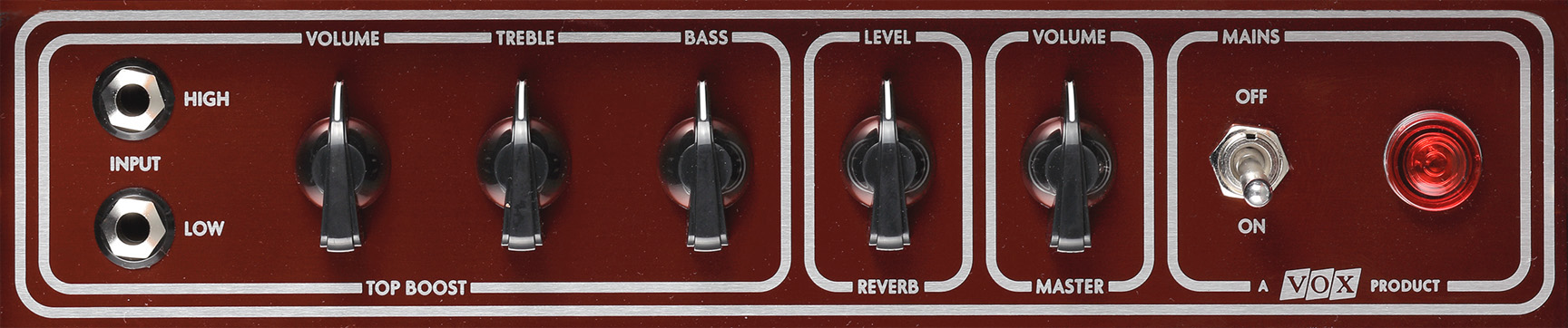 Vox AC4HWR1 Valve Combo Control Panel Layout
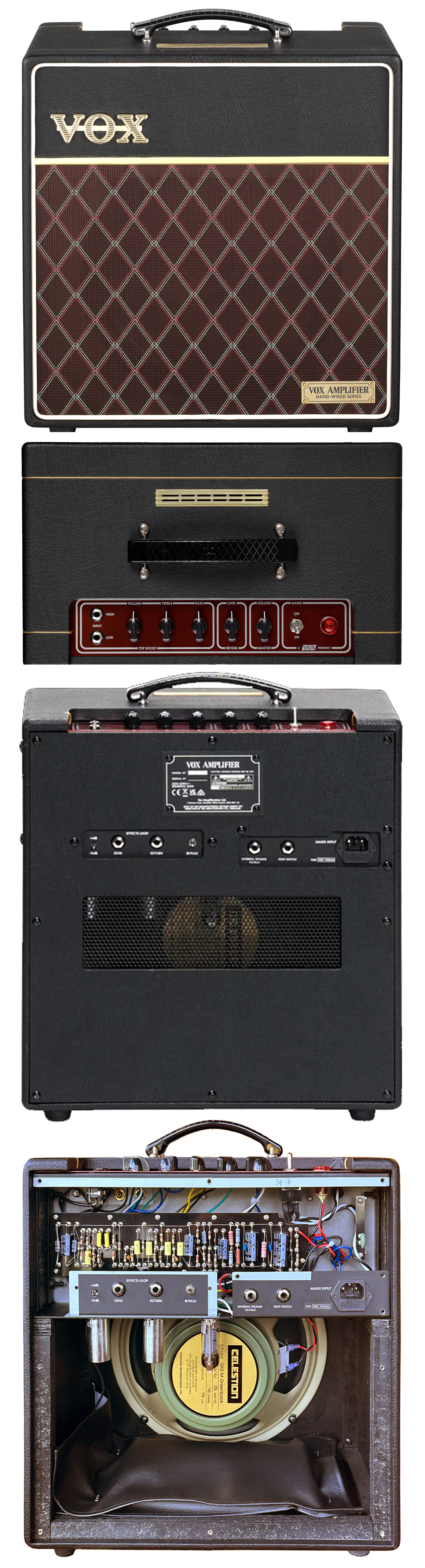 Vox AC4HWR1 with Rear Panel Removed Vox AC4HWR1 with Rear Panel Removed
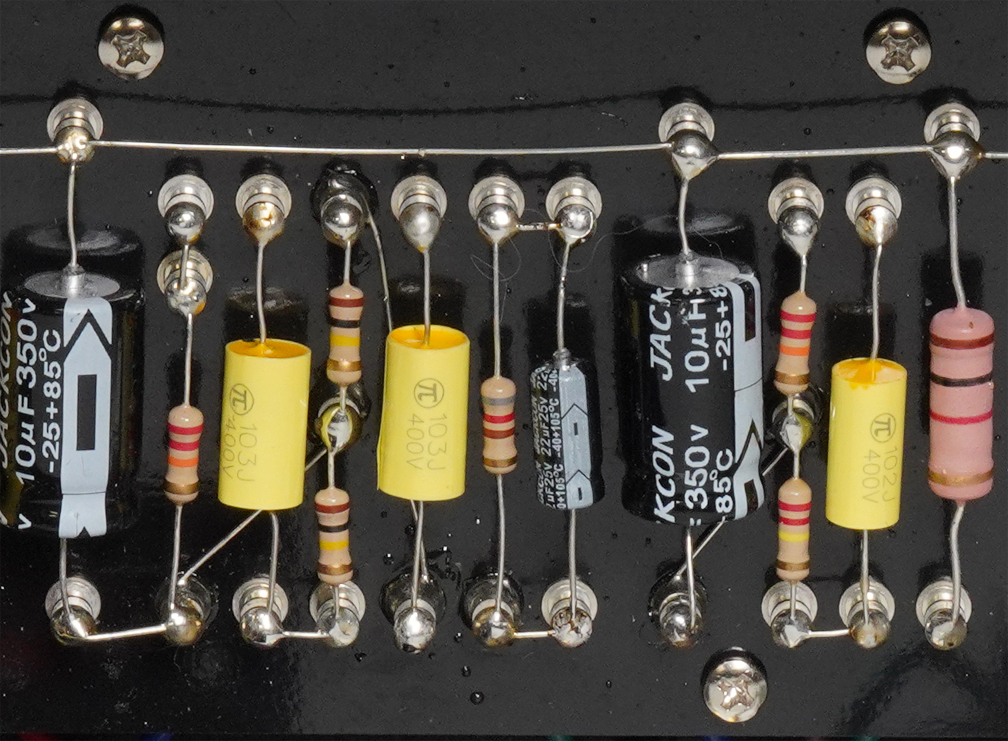
Closeup: Hand-Wired Turret Construction
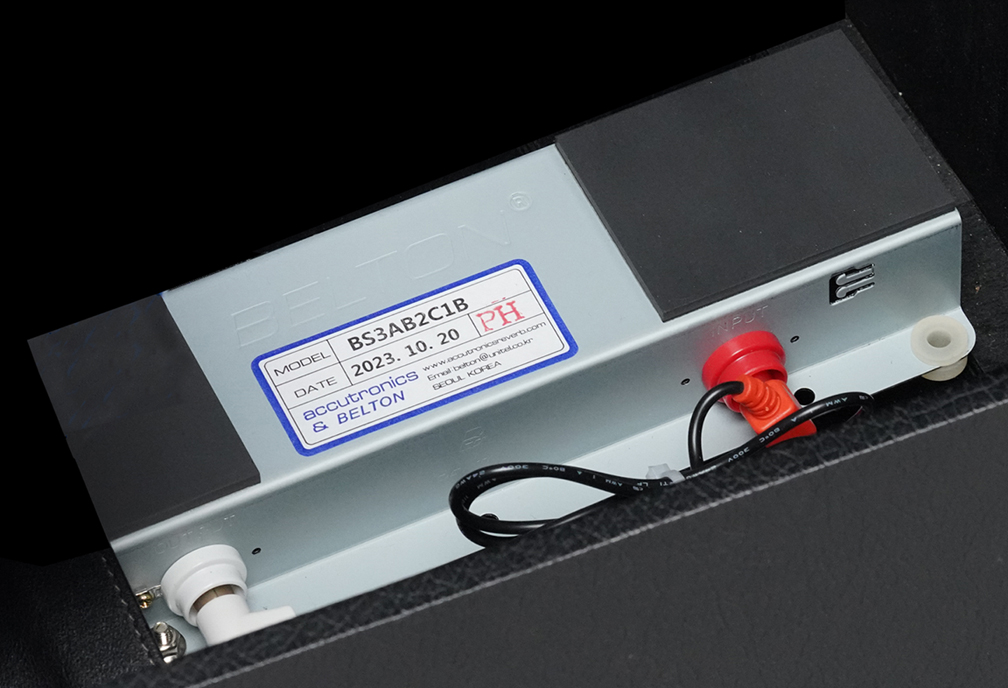
Three spring medium delay reverb pan
|
|
Tracing its lineage back to 1961, the hand-wired Vox AC4HWR1 bridged the gap between past and present, blending vintage and modern design elements into a fitting tribute to one of the earliest Vox amp models, the original AC-4.
JMI Vox AC-4 (1961-65)
Debuting in late 1961, the JMI (Jennings Musical Industries) Vox AC-4 was a 4-watt student amplifier equipped with an 8 inch Elac speaker. Its four tube design included an unconventional choice for the preamp circuit: an EF86 pentode. The remaining three tubes were a 12AX7 for the tremolo circuit, an EL84 powering the four-watt amplifier stage and an EZ80 rectifier for the power supply. The amplifier utilized hand-wired point-to-point circuitry mounted to an "L" shaped steel chassis. The outside of the chassis was painted champagne pink and served as the background for the control panel's silk screened nomenclature. The panel layout featured dual ¼" inputs alongside controls for volume, tremolo speed, and a tone knob/power switch combo. A foot switch enabled the tremolo circuit.
Driven by his preference for the high gain and rich harmonic profile of the EF86 tube, Vox's lead engineer Dick Denney designed it into the preamp sections of the AC-4, AC-10, AC-15, and AC30/4. However, Denney's EF86 preamp circuit design limited tone shaping to a single passive control to roll off treble. This may have been adequate for the student-level AC-4, but not for professional grade amps such as the AC-30 where active bass and treble controls were preferred.
Top Boost Circuit
The turning point came in 1961 when Vox retired the twin-channel, EF86 driven AC30/4. Its successor, the AC30/6, boasted three channels (Normal, Brilliant and Vibrato) and a revised preamp section built around conventional 12AX7 tubes. However, the introduction of the AC30/6 still did not address the issue of active bass and treble controls. It retained the passive tone control circuitry from the AC30/4.
To bring active bass and treble controls to the AC30/6, Vox rolled out the optional "Top Boost" circuit kit. Also introduced in 1961, this upgrade added an extra 12AX7 tube to the AC30/6 circuit, bringing active bass and treble controls to the Brilliant channel.
"Thin Edge" Cabinet Design
The 1961 AC-4 introduced the iconic Vox "split front" aesthetic, dividing the face of the cabinet into a vinyl covered upper third and a diamond grille bottom. Except for the top and baffle, the AC-4 was constructed of 7 ply ⅜" (9mm) thick birch plywood, often referred to as the "thin edge" cabinet design. The top and baffle were 13-ply ¾" (18mm) birch plywood. No radius on rear edges, two brass vents.
The AC-4 featured fawn vinyl from late 1961 until late 1963, followed by a brief transition to pebbled black vinyl in January 1964. By March, Vox permanently switched to black basket weave vinyl for the remainder of the AC-4's production run.
JMI Vox AC-4 dimensions and weight: 16" x 7½" x 16½", ~20 lbs.
Vox AC4HWR1 (2024-)
The AC4HWR1 was a hand wired, four watt amplifier introduced in 2024 as the replacement of the AC4HW1 (2012-2024). Its three-tube layout featured two 12AX7 tubes —one for the preamp and another serving as a phase inverter, driving a single ended four-watt EL84 tube output stage.
Unlike the "L" shaped chassis and champagne pink painted control panel of the vintage JMI AC-4, the AC4HWR1 utilized a "C" shaped steel chassis with a separate red anodized control panel. The AC4HWR1 panel included five controls: Volume (preamp), Treble, Bass, Reverb and Master Volume.
Featuring independent preamp and master volume controls, the AC4HWR1 allowed players to get overdriven preamp tones at lower output levels. Additionally, the AC4HWR1 provided ¼" high and low sensitivity input jacks.
Instead of the original AC-4's single passive tone control, the AC4HWR1 adopted the iconic AC-30 Top Boost design, adding active bass and treble controls to the amplifier. The original JMI Vox Top Boost circuit was powered by a 12AX7 utilizing a cathode follower circuit. In contrast, the Top Boost circuit in the AC4HWR1 was driven by the plate of a 12AX7.
The AC4HWR1 featured a reverb circuit built around a three-spring BS3AB2C1B Belton/Accutronics tank. The reverb send stage combined a MOSFET transistor with a custom drive transformer while a separate MOSFET driven recovery stage powered the return signal. The pan was enclosed in a vinyl bag screwed to the bottom of the cabinet. Also included was the Vox VFS-1, a remote single-button footswitch for controlling the reverb.
The unprecedented use of a phase inverter in a single ended audio output stage allowed the AC4HWR1 to generate the same push-pull style harmonics of larger VOX models.
Departing from the original AC-4’s EZ80 rectifier tube, the AC4HWR1 incorporated a custom wound, center-tapped mains transformer and a full-wave power supply utilizing two solid state 1N4007 diodes. While eliminating the EZ80 rectifier tube, it did not sacrifice tone. The solid-state power supply architecture was meticulously tuned to replicate the natural voltage sag and subsequent audio compression of the classic EZ80.
The AC4HWR1 also included a fully bypassable MOSFET transistor buffered effects loop with -10/+4db switch
Like the original JMI Vox AC-4, the AC4HWR1 included a thin edge cabinet. The AC4HWR1 was primarily constructed of 7 ply ⅜" (9mm) thick birch plywood. The top and baffle were 11-ply ⅝" (15mm) birch plywood. The cabinet was covered in pebbled black vinyl, similar to the JMI Vox AC-4 in early 1964. All edges radiused, one vintage style brass vent.
The AC4HWR1 featured a 16 ohm 12" Celestion Greenback speaker, a major upgrade over the 8" Elac speaker installed in the original Vox AC-4.
|
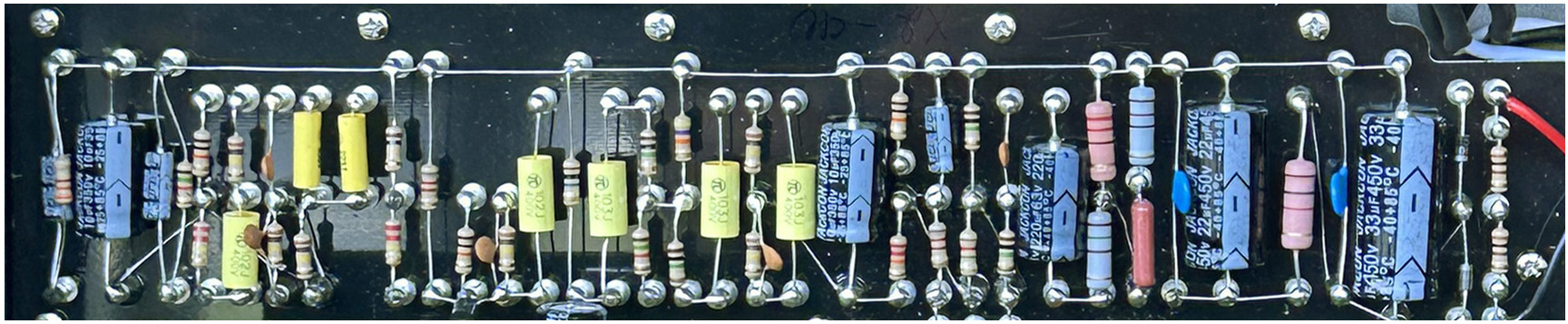
Closeup: Vox AC4HWR1 Hand Wired Turret Strip
VOX AC4HWR1 Valve Combo Specifications
| Output Power: |
|
4 Watts RMS |
|
Speakers: |
|
One 12", 16 ohm Celestion Greenback |
|
Inputs: |
|
One ¼" High and one ¼" Low Jack, FX return |
|
Outputs: |
|
Single ¼" extension speaker jack, FX send |
|
Controls: |
|
Volume (preamp), Bass, Treble, Reverb Level, Master Volume, Mains On/Off |
|
Tubes: |
|
2 - ECC83, 1 EL84 |
| Included: |
|
VFS1 foot switch for reverb |
| Dimensions: |
|
(W x D x H): ~16.4" x ~9.6" x ~18.7 in |
| Weight: |
|
29.98 lbs (35 lbs in the shipping carton) |
| MSRP (2026): |
|
$1539.99 |
| Street Price: |
|
$1099.99 |
|
3_Footer

Photos and editorial content courtesy Gary Hahlbeck
Any and all material presented herein is protected by Copyright.
© 1998 - 2026 The Vox Showroom, all rights reserved
The images and editorial content in this web site may not be copied or reproduced
in online auction sites such as eBay, Reverb and Craig's List. Sellers may provide a link
to the Vox Showroom web site if they wish to refer to this copyrighted material.
|
URL: https://www.voxshowroom.com/uk/amp/AC4HWR1.html
|